
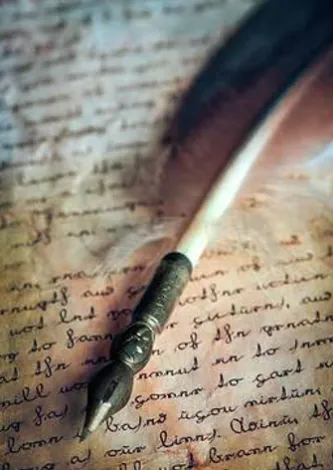
THE QUEEN WHO MOVED THE WORLD
3,35 €
You already know her name.
You do not yet know her.
History gave you Isabella of Castile as a footnote to Columbus — the queen who said yes, the signature at the bottom of the contract that changed the world. What history did not give you was the woman who spent seven years in near-poverty refusing to stop, who negotiated her own equality into her marriage contract at nineteen, who rode into battle five months pregnant, who held her dying daughter in her arms and returned to the correspondence the next morning, who wrote indigenous rights legislation she knew her own empire was violating and wrote it again anyway, who built hospitals and visited them and asked the physicians about the food, who authorized the Spanish Inquisition and spent the rest of her life governing it with the same unflinching accountability she brought to everything — including herself.
That woman has been waiting five hundred years for this book.
THE QUEEN WHO MOVED THE WORLD is the biography that finally refuses to choose. It does not give you the spotless saint of Isabella’s admirers or the cold persecutor of her critics. It gives you the full human being — the girl nobody wanted who became the woman nobody could stop, the queen who built the most sophisticated legal system in Europe and expelled two hundred thousand people in the same year, the mother who loved her children with specific, costly, daily devotion and could not save a single one of them from the futures their dynasty required, the ruler who meant every word she wrote and lived, every day, inside the devastating distance between what she meant and what the world made of her meaning.
Inside these eighty-two thousand words you will find:
A secret marriage that changed the course of history, negotiated in coded letters across guarded borders by two teenagers who had never met and who became, across thirty-five years of genuine partnership, each other’s most honest critics and most reliable allies.
A ten-year war fought from horseback, from supply tents, from field hospitals she organized herself, in a kingdom she was simultaneously rebuilding from the inside out.
A Columbus who is neither hero nor villain but something more unsettling — a man of genuine greatness whose certainty was so complete it could not hear the instructions given to it, sailing toward a world that would bear the cost of his conviction for centuries.
A Juana — her daughter, her heir, her heartbreak — whose intelligence was real and whose love was too large for the containers her world provided, and whose story this book tells with a compassion that the history books have consistently withheld.
A death faced with the same clear-eyed attention Isabella brought to everything — not peacefully, not with resolution, but honestly, still working, still writing, still insisting on the record of what was owed even as the body that had carried the insistence for fifty-three years finally, irrevocably, stopped.
This is not a comfortable book.
It is the kind of book that changes the way you think about power, about faith, about what it costs to build something that matters and what it means to reckon honestly with the building. It is the kind of book you finish and immediately press into the hands of someone you love, not because it answered your questions but because it gave you better ones.
It is the kind of book that lasts.
THE QUEEN WHO MOVED THE WORLD is narrative nonfiction at the level of literature — as propulsive as a novel, as rigorous as serious history, as emotionally devastating as the best biography you have ever read, and more morally alive than almost anything published in this decade.
Isabella of Castile moved the world.
This book will move you.
Over dit boek
Be the first to review “THE QUEEN WHO MOVED THE WORLD”
Related products
Biografieën
Biografieën
Biografieën
Biografieën
Biografieën
Biografieën
Biografieën
Biografieën
Biografieën
Biografieën
Biografieën

Biografieën
Biografieën
Biografieën

Biografieën
Biografieën
Reviews
There are no reviews yet.